This video is part of a series of materials designed for Jesuit formation in community and group contexts, promoting deep reflection and enriching dialogue among participants.
Production and copyright: Jim McDermot (2008)
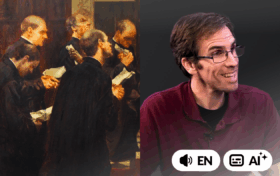
This video critically examines common perceptions about the Jesuits’ history, charism, and accomplishments, urging caution against overstating their uniqueness. It highlights the importance of balancing normative texts with social history and contends that while Jesuits had notable achievements, especially in education and the arts, they remained products of their time and shared many practices with contemporaneous religious orders.
Highlights:
00:00 – 02:29: Caution Against Overstating Jesuits’ Uniqueness
The speaker introduces the concept of the fallacy of inflated differences, cautioning Jesuits and scholars to avoid exaggerating the distinctiveness of Jesuit history and charism relative to contemporaries, noting similarities with other religious orders particularly in their commitment to arts like music and drama.
Conclusion: Jesuits were remarkable but not entirely unique; their practices aligned with their historical context.
02:30 – 04:35: Importance of Looking Beyond Foundational Documents
Discussion centers on Jesuit foundational documents (the Formula, Constitutions, Spiritual Exercises) and their limitations, emphasizing that these normative texts do not fully capture Jesuit realities such as the rise of schools as a ministry not mentioned in early documents.
Conclusion: Historical social practice often diverged from or outpaced official norms.*
04:36 – 06:45: The Nuances of Education and the Arts in Jesuit Ministry
The speaker analyzes the Rio Studiorum (plan of studies) as a misleading official document, showing that many Jesuit schools implemented a truncated curriculum focusing mainly on humanities disciplines rather than the full plan. Contrary to the restrictive tone of the official documents, theater and drama thrived in Jesuit education worldwide, becoming a vibrant and influential feature.
Conclusion: Jesuit educational practice was dynamic and more expansive than normative plans indicated.














There are no reviews yet.